

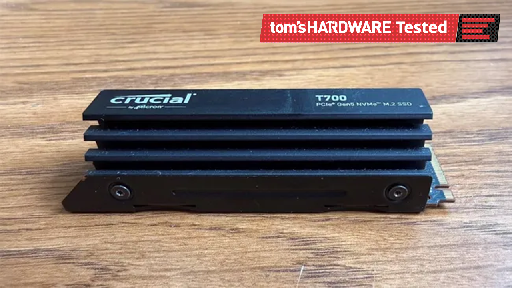
- cross-posted to:
- pcmasterrace@lemmy.world
Yeah SATA SSDs are still fine for gaming, nvme just slightly improve load times
Out of all the games tested, only two showed measurable performance differences between SATA and PCIe SSDs: Forspoken and Ratchet & Clank: Rift Apart.
Across all other titles, PCIe SSDs provided no meaningful performance advantage, and there were no observable differences between PCIe generations. In the vast majority of games tested, a SATA SSD delivers comparable performance.
My cheap ass can’t tell the difference either
I can tell the difference between nvme and sata when booting and loading applications. It’s so small that I’m happy to remain a cheap ass. I also went to college in the “turn on your computer, then go make breakfast” days, so I guess in more tolerant of it.
The problem is that SATA SSDs, at least in Europe, are rarily meaningfully cheaper than some cost effective PCIe3.0 or PCIe4.0 SSD. Well at least it was like that before the AI inflation.
Yes, but an SSD you already own is cheaper than buying a new one. So it’s interesting to see how much improvement an NVMe SSD would make if someone were to upgrade from a SATA one.
That is another question, at the current crazy prices, even for SATA SSDs I would not upgrade in any case unless I realky need additional capacity.
Top reasons I love PCIe NVMe storage:
Sure thing, if I need to add/replace/remove one it is a bigger hassle and probably involves removing the GPU as well, but it is rare for me to need to do that, so I prefer the simplicity of doing away with SATA.
Yea but what about real world impact of 27 pr0n torrentz on AAA gaming load times.
Is the answer a secret or are you not seeking to inform but just have me click the link?
They only tested frame rates. There was no real difference between PCIe versions and most games ran nearly as well from SATA SSDs.
It would have been nice if they tested load times.
I imagine this would show up as texture pop in as often they will load the lower resolution textures first while the higher resolution ones load in, which wouldn’t shown up in n average framerate graph. I’d like to see a frametime plot as well as 1% lows don’t really tell enough of the picture for stuftering.
Might even get better performance with slow drives, with lesser/no textures used for longer periods
Exactly - most game engines now will hide this rather than stutter.
Got an NVMe and a RAID array in my gaming desktop; the RAID does about 1 GB/s sustained read and write, which is good, but its latency is quite bad. Was playing Elden Ring directly from it since I couldn’t be bothered moving it - load times were good, but “fog doors” appear over doorways and cave entrances while they’re being loaded, which never happens on SSD. Never dropped a frame, though.
Yes, exactly. Testing storage with game frame rate betrays a pretty fundamental misunderstanding of how modern video games work.
lmfao what in the hell does the storage medium have to do with frame rate. You can’t really start rendering anything until you’ve loaded the things that should be rendered. And at that point the storage medium should be finished doing its thing.
If your frame rate depends on your storage medium, I would consider that a bug, lol.
Some games do streaming on the fly when you enter a new area to avoid loading screens for massive-world games like maybe the new Zelda games and GTA style games. But once the data is loaded, lay off the storage device.
There are a number of games — particularly those since SSD storage became pretty much the norm — that do not load a whole level, but load while playing. Why not just load the game (or the level)? Because it lets devices with less RAM store more stuff than they otherwise would. You have more relaxed caps on things lile texture size.
I’d assume that the engine is still going to try to predict what content is going to be needed prior to it being needed, that it’s got a strategy more sophisticated than just “load resource first time it’s requested”. But SSD storage is going to be more forgiving of a miss than rotational storage.
Bethesda uses the term “cell”. I know that their engine uses a square grid as the loading unit, loads a sort of circle of cells around the cell where the player is.
searches
It sounds like the Unreal 5 terminology is “sublevel”, for the units loaded.
Right, that’s what I was referring to in my comment. Games that load while playing to avoid loading screens between areas. 👍
The purpose of a Lemmy - like Reddit - is to share a link, people read the link, and then they discuss the link in the comments. It’s up to you if you want to just get the gist from the comments, but you don’t need to do it in such an entitled and obnoxious way by leaving a comment to OP like this. OP is just sharing an interesting article.
While there is no difference in performance between the PCIe NVMe SSDs, you can see that having a PCIe SSD can give you a large boost in the 1% lows compared to a SATA SSD. We see a 39% increase in 1% lows at 4K, a 51% increase at 1440p, and a 22% increase at 1080p.
The higher peak and average bandwidth used by the PCIe drives resulted in higher 1% lows in this game, which makes for a smoother gameplay experience.
Next they’ll test the PSU’s to see if the the ‘platinum’ ones improve frame rate. Then they’ll test cases with and without windows.
Why would any of this matter at the moment? We use the SSDs we already have or can somehow afford. Cost is pretty much the only factor that matters. Virtually nobody had the money to care about trivial things.
Imagine having a bunch of SSDs at the same place. That has to be worth millions these days 🙃
Unironically, that’s the future scam Altman & friends desire
Would using monster audio cables make my frame rate go brr?
Cry in the middle of some old scrapped HDD…
So, game optimization makes all the differnce and lazy coding sells more drives. Thats how I read it at least. These performance comparisons could really use a unified definition of JND (just noticable difference).
How did you get the opposite conclusion. The only 2 games that benefited from the new(er) technology are the ones that implemented it


